
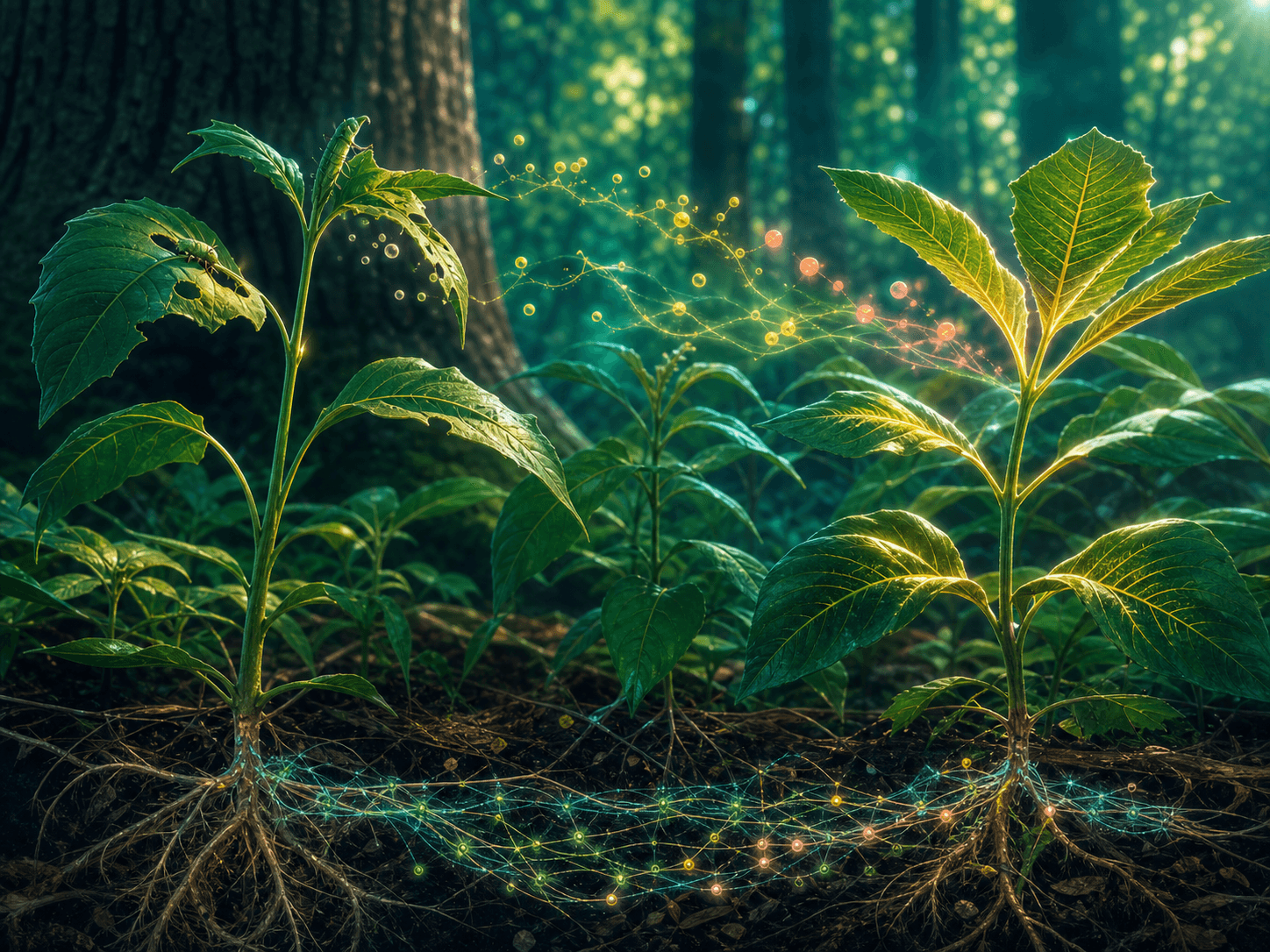
Damaged plants may release airborne chemicals that influence neighbouring plants or attract predators of the attacking insect. Roots and fungal networks can also carry chemical information. Calling this human-like conversation can be misleading.
What we found
Plants sense light, gravity, touch, water and chemicals. When attacked, some species change their chemistry and release volatile compounds. Nearby plants may then increase defensive responses, while insects can use the same compounds as clues. These processes are real signalling systems, but plants do not use words or intentions in the human sense. The Ridbusters then compare the wording with the original sources, look for the conditions of each observation and check whether another explanation could fit. That turns a surprising headline into a trail a young investigator can follow: claim, test, result and remaining uncertainty. Damaged plants may release airborne chemicals that influence neighbouring plants or attract predators of the attacking insect.