
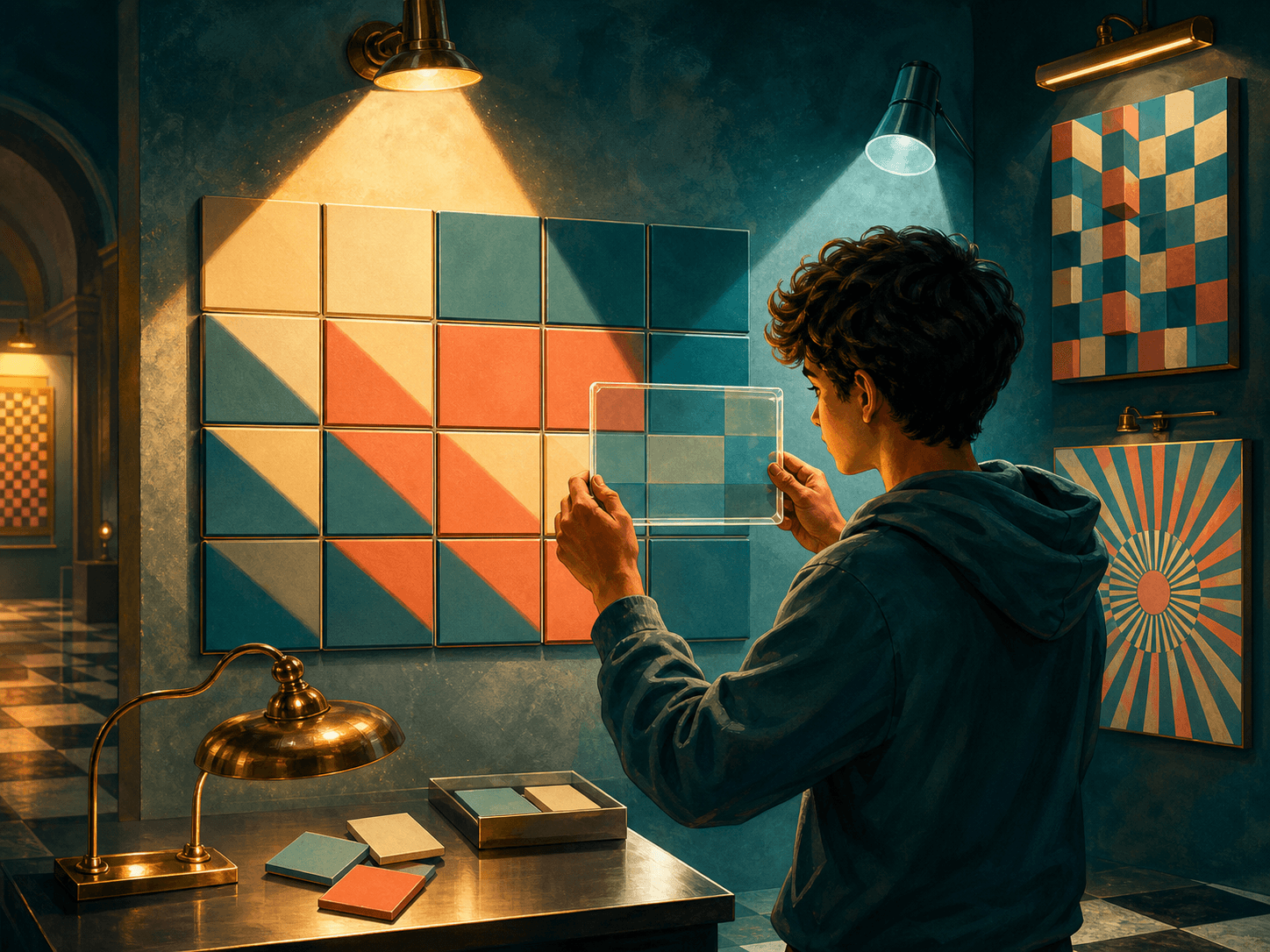
Illusions usually reveal how a normal brain interprets incomplete or ambiguous information. Perception uses context, expectations, contrast and past experience to construct a useful model of the world.
What we found
The visual system must make rapid guesses from limited signals. Most of the time those shortcuts work well, but carefully designed images can create conflicting clues. Two equal lines may look different because of surrounding shapes, or a colour may change appearance beside another colour. Illusions are scientific tools for studying perception, not proof of defective vision. The Ridbusters then compare the wording with the original sources, look for the conditions of each observation and check whether another explanation could fit. That turns a surprising headline into a trail a young investigator can follow: claim, test, result and remaining uncertainty. Illusions usually reveal how a normal brain interprets incomplete or ambiguous information.