
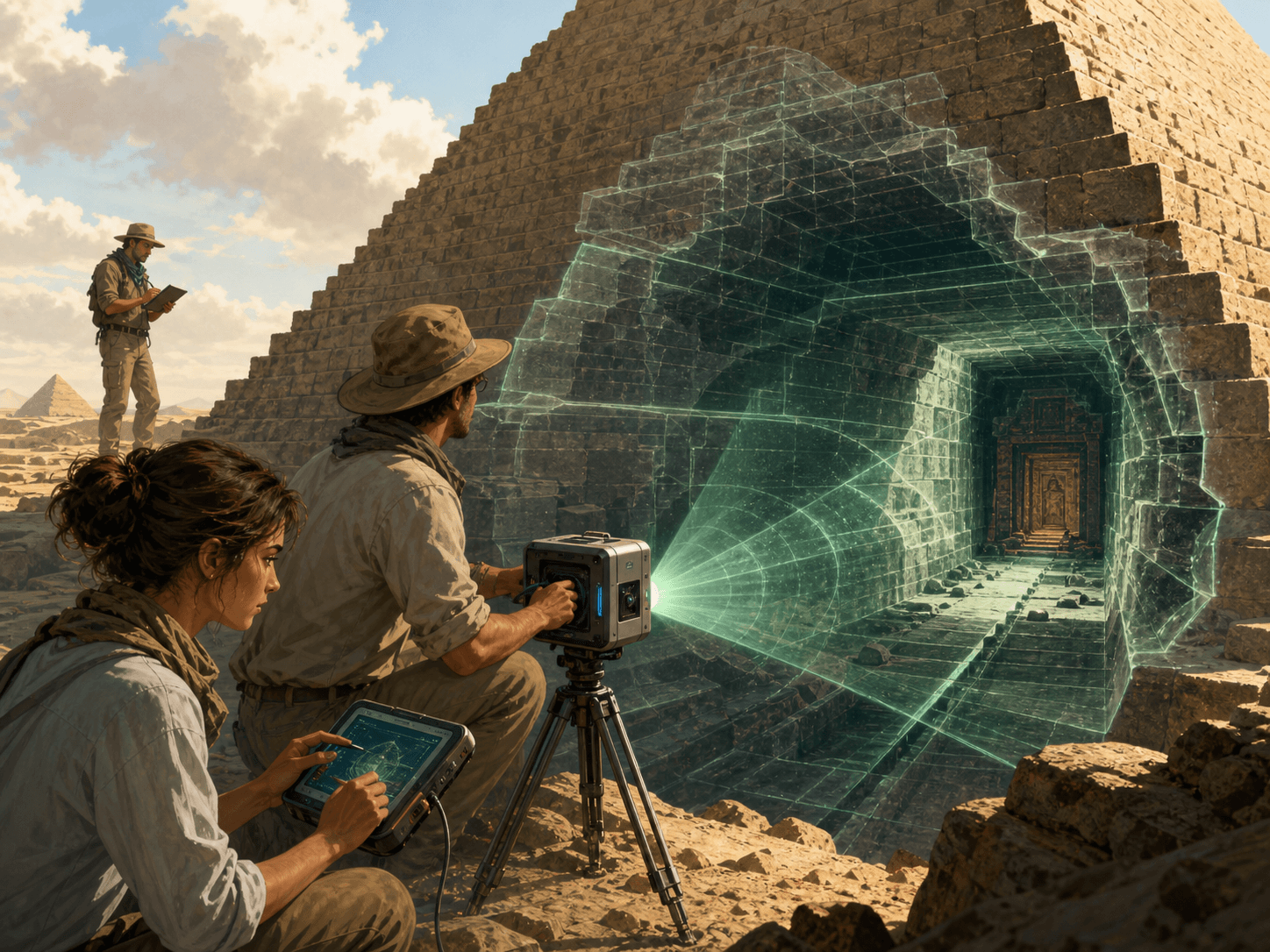
Ground-penetrating radar, electrical methods, thermal imaging, tiny cameras and cosmic-ray muon scanning can reveal differences inside structures or underground. Results must be interpreted carefully and often need confirmation by another method.
What we found
Non-destructive tools allow researchers to investigate before excavating. Radar detects reflected signals, thermal cameras reveal temperature differences, and muons pass through stone at rates that depend on density. A suspicious void is not automatically a tomb or treasure room; natural cracks and construction features can produce similar signals. Good archaeology combines instruments, historical context and cautious verification. The Ridbusters then compare the wording with the original sources, look for the conditions of each observation and check whether another explanation could fit. That turns a surprising headline into a trail a young investigator can follow: claim, test, result and remaining uncertainty. Ground-penetrating radar, electrical methods, thermal imaging, tiny cameras and cosmic-ray muon scanning can reveal differences inside structures or underground.