
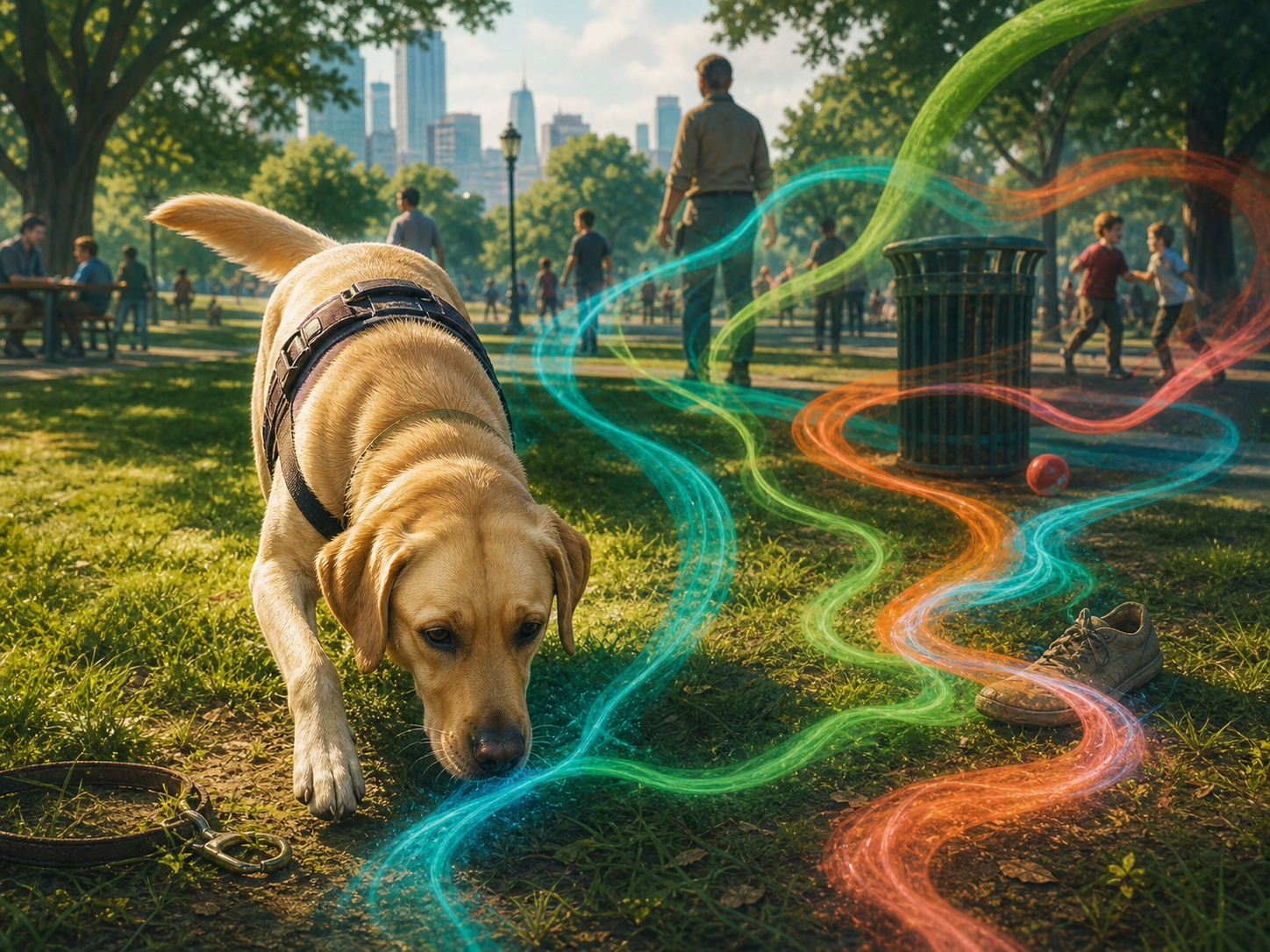
Dogs have many more scent receptors than humans and devote a large part of the brain to processing odours. Trained dogs can locate people, explosives, wildlife and some biological samples, but performance depends on training and conditions.
What we found
Smell is produced by molecules reaching receptors in the nose. A dog’s airflow and nasal anatomy help collect and analyse those molecules. Handlers must avoid giving accidental cues, and tests need controls because dogs are not infallible. Their ability is extraordinary, but claims about diagnosing every disease or always identifying one person require careful evidence. The Ridbusters then compare the wording with the original sources, look for the conditions of each observation and check whether another explanation could fit. That turns a surprising headline into a trail a young investigator can follow: claim, test, result and remaining uncertainty. Dogs have many more scent receptors than humans and devote a large part of the brain to processing odours.