
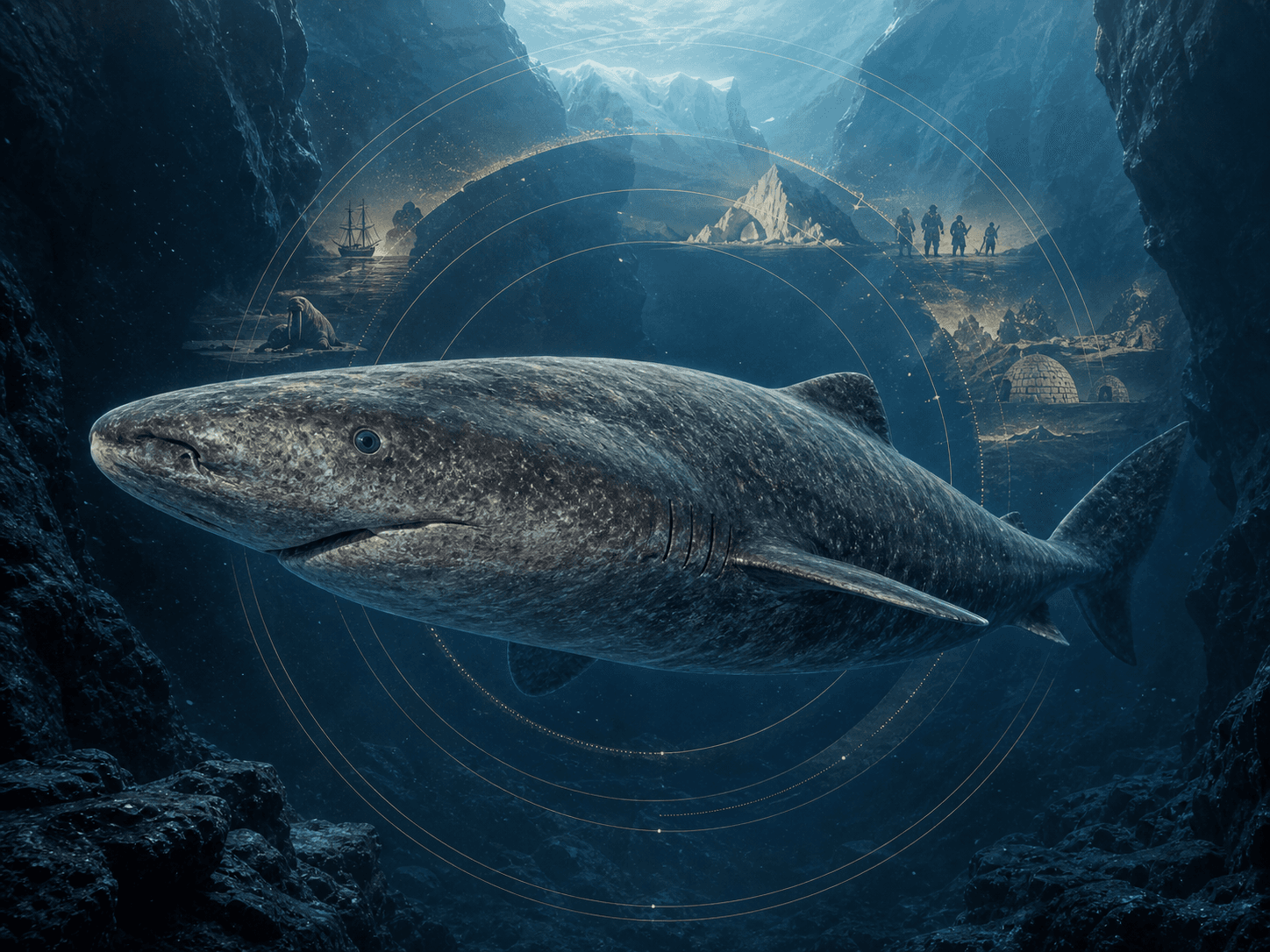
Cold, stable environments and slow metabolisms contribute to exceptional lifespans in some deep-sea species. Greenland sharks may live for several centuries, and some corals and sponges can persist even longer. Age estimates have uncertainty.
What we found
Scientists estimate age using growth layers, radiocarbon methods and chemical markers. In slow-growing animals, the record can be difficult to interpret, so ranges are more honest than exact birthdays. Long life does not mean an individual is indestructible: slow reproduction can make these species especially vulnerable to fishing and environmental change. The Ridbusters then compare the wording with the original sources, look for the conditions of each observation and check whether another explanation could fit. That turns a surprising headline into a trail a young investigator can follow: claim, test, result and remaining uncertainty. Cold, stable environments and slow metabolisms contribute to exceptional lifespans in some deep-sea species.